
China Top 10 Aluminum Profiles for Sliding Doors Suppliers

China has become a major manufacturing base for Aluminum Profiles For Sliding Doors, serving residential, commercial, and customized building projects worldwide. This guide introduces ten notable Chinese suppliers for buyers seeking dependable extrusion quality, practical design support, and stable production capacity.

The selection considers experience, technical expertise, product range, and publicly available evidence. Important details include alloy options, profile thickness, dimensional tolerance, surface treatment, and compatibility with sliding-door rollers. A reliable supplier should explain these points clearly. It should also provide samples, inspection records, packaging details, and realistic lead times.

Look closely at factory capabilities.

Some manufacturers operate advanced extrusion lines, anodizing systems, and powder-coating facilities. Others depend heavily on outside processors. That difference may affect consistency, communication, and delivery control. Buyers should request recent project references, test reports, and applicable quality certifications before making a decision. Certifications help, but they never replace physical inspection or sample approval.

This overview does not treat any ranking as permanent. Market information changes, and supplier performance can vary between projects. Some public company records may be incomplete. That limitation deserves attention. A supplier with attractive prices may still need stronger documentation or clearer after-sales support. Conversely, a smaller manufacturer may offer careful engineering assistance and more flexible customization.

The companies discussed here represent different strengths, including export experience, architectural systems, custom extrusion, and finishing capacity. Practical evaluation remains essential. Compare drawings, tooling charges, minimum order quantities, warranty terms, and communication speed. The best partner is not always the largest factory. It is the supplier that can repeatedly deliver safe, compliant, and accurately finished profiles for your specific sliding-door application.
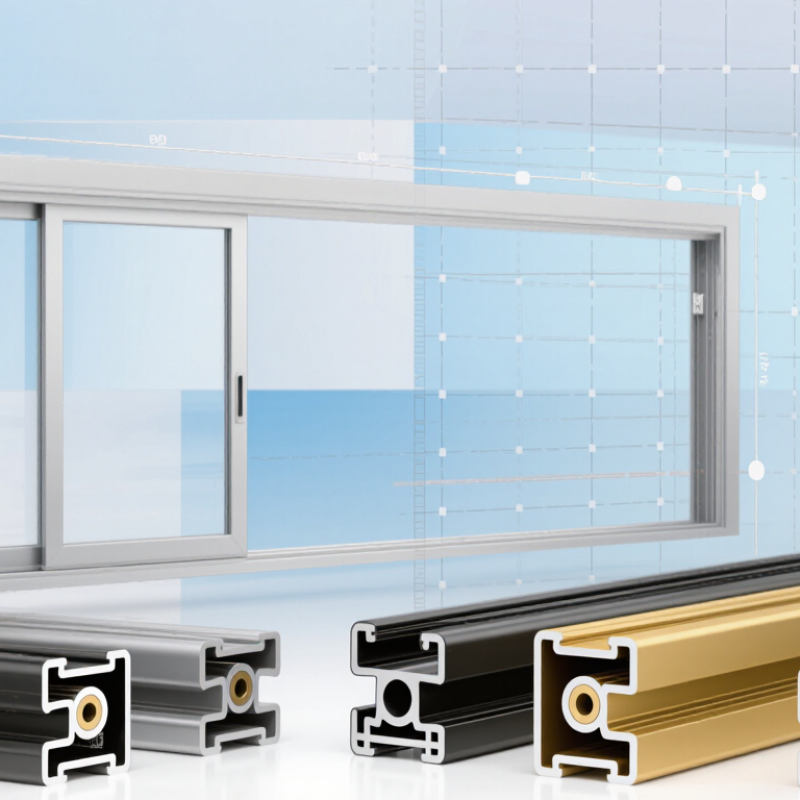
China Top 10 Aluminum Profiles for Sliding Doors Suppliers

How Aluminum Profiles Support Sliding Door Performance

China Top 10 Aluminum Profiles for Sliding Doors Suppliers

Aluminum profiles directly influence sliding door performance, not just appearance. A well-designed frame keeps the panels aligned during repeated movement. It also reduces vibration, air leakage, and visible deflection. Wall thickness matters, but thicker is not always better. Poor geometry can still create weak corners and difficult installation.

Practical door testing should include opening cycles, load checks, and track alignment. The profile must support rollers without twisting under pressure. Smooth internal channels also help installers position seals and drainage paths accurately. Thermal-break designs can reduce heat transfer in exterior doors. However, their results depend on correct assembly and suitable gaskets. One common mistake is choosing a profile by weight alone. That approach feels safe, but it may increase cost without improving operation. Small dimensional errors can become obvious after months of use.

Tips: Check profile tolerances before ordering. Ask for section drawings and sample lengths. Test the frame with the intended glass weight, rollers, locks, and seals. Inspect corner joints carefully; a neat exterior can hide weak connections. Do not ignore surface consistency, especially for large sliding panels. Powder coating and anodizing should resist scratches, but site handling still matters. A supplier’s technical documents should explain alloy grade, temper, wall thickness, and applicable test methods. Claims without measurable data deserve a second look.


How Aluminum Profiles Support Sliding Door Performance

Mechanical strength is a key reference when evaluating aluminum sliding-door profiles. The chart shows typical minimum values for 6063-T5 aluminum extrusion, a widely used alloy and temper for architectural profiles.

Higher tensile and yield strength can help profiles resist bending, deflection, and repeated operating loads. Actual door performance also depends on profile geometry, wall thickness, reinforcement, rollers, hardware, glazing weight, and the use of thermal breaks. Reference values: 6063-T5 minimum tensile strength 152 MPa and minimum yield strength 110 MPa, commonly specified in aluminum extrusion standards such as ASTM B221.

Key Criteria for Evaluating Chinese Aluminum Profile Suppliers

China Top 10 Aluminum Profiles for Sliding Doors Suppliers

Choosing among China’s top aluminum profile suppliers requires more than comparing prices. The right evaluation starts with alloy control, extrusion accuracy, surface treatment, and production consistency. Ask for the aluminum grade, dimensional tolerances, wall thickness, and inspection records. A reliable supplier should explain these details clearly, not hide behind attractive catalogs.

Request physical samples before approving a large order. Check whether tracks remain straight after cutting and whether rollers move smoothly without excessive noise. Examine coating thickness, color consistency, corner finish, and resistance to scratches. Factory capacity also matters. Review tooling management, quality-control procedures, packaging methods, and realistic lead times. Certifications can support credibility, but they should be verified and matched to the actual product.

Tips: Compare three suppliers using the same drawing and specifications. Ask for a sample report, not only photographs. Confirm mold ownership, replacement costs, minimum order quantities, and after-sales response times. A factory visit or independent inspection adds useful evidence. Still, no supplier is perfect. Even a capable manufacturer may miss a detail during a busy production period. Leave room for corrective action, and record every agreed tolerance in writing. Small misunderstandings can become expensive when thousands of profiles arrive.

China Top 10 Aluminum Profiles for Sliding Doors Suppliers - Key Criteria for Evaluating Chinese Aluminum Profile Suppliers
Rank Anonymous Supplier Profile Typical Sliding-Door Product Focus Common Alloy & Temper Typical Profile Wall Thickness Typical Maximum Extrusion Length Indicative MOQ Typical Tooling Charge Typical Production Lead Time Surface-Finish Capability Quality-Control Evidence to Request Export & Customization Strength Benchmark Score
1 Profile A Premium thermal-break sliding doors and large-panel systems 6063-T5, 6063-T6; polyamide thermal-break assemblies 1.6–2.5 mm Up to approximately 7.2 m 500–1,000 kg per profile series US$500–1,500 per die 25–40 days after drawing approval Powder coating, anodizing, PVDF coating, wood-grain transfer Mill certificates, coating reports, dimensional inspection records, thermal-break test data Strong engineering support, OEM drawings, container-loading plans and export packaging 9.4/10
2 Profile B Residential sliding-door frames and balcony enclosure systems 6063-T5; selected 6061-T6 components 1.2–2.0 mm Up to approximately 6.8 m 300–800 kg per color or profile US$350–1,200 per die 20–35 days after sample confirmation Powder coating, anodizing and standard mill finish Alloy certificates, coating thickness records, color samples and final inspection report Good support for standard profiles, private-label packing and mixed-container orders 9.2/10
3 Profile C Heavy-duty sliding doors for villas, hotels and commercial buildings 6063-T5/T6; 6005A-T6 for reinforced components 1.8–3.0 mm Up to approximately 7.5 m 800–1,500 kg per extrusion program US$600–1,800 per die 30–45 days Anodizing, powder coating, PVDF and wood-effect finishes Tensile-test results, dimensional reports, coating adhesion tests and batch traceability High load-bearing capability and project-based technical customization 9.1/10
4 Profile D Economical sliding-door kits for residential construction 6063-T5 1.0–1.8 mm Up to approximately 6.5 m 200–500 kg per profile US$250–900 per die 18–30 days Mill finish, anodizing and standard powder coating Basic alloy certificate, profile measurement report, color-card confirmation and packing inspection Competitive pricing, standard catalog availability and flexible small-batch production 8.8/10
5 Profile E Minimalist slim-frame doors and narrow-stile systems 6063-T5/T6 1.2–2.2 mm Up to approximately 7.0 m 400–900 kg per profile series US$400–1,400 per die 25–40 days Anodizing, matte powder coating, fluorocarbon and brushed finishes Critical-dimension inspection, straightness report, surface-quality records and sample approval Strong capability for customized appearance, slim sections and coordinated hardware channels 8.7/10
6 Profile F Thermal-break doors for energy-efficient residential projects 6063-T5; 6061-T6 for structural inserts 1.6–2.6 mm Up to approximately 7.2 m 600–1,200 kg per profile series US$500–1,600 per die 30–45 days Powder coating, anodizing and thermal-break assembly Thermal conductivity data, polyamide-strip specifications, air-tightness test records and dimensional reports Suitable for energy-performance projects requiring technical documentation 8.6/10
7 Profile G Custom architectural profiles for regional door-system designs 6063-T5/T6 1.3–2.5 mm Up to approximately 6.8 m 300–700 kg per custom profile US$300–1,300 per die 25–40 days Powder coating, anodizing, wood-grain and special color matching Approved golden sample, color tolerance records, profile drawings and pre-shipment inspection Flexible design revision process and suitable for OEM or project-specific profiles 8.4/10
8 Profile H Large sliding-door frames with reinforced tracks and rollers 6063-T5; 6005A-T6 for high-load rails 1.8–3.2 mm Up to approximately 7.0 m 700–1,500 kg per profile family US$550–1,700 per die 30–50 days Powder coating, anodizing and mill finish Load-test records, hardness results, rail straightness data, alloy certificates and packing photos Well suited to oversized panels and reinforced track requirements 8.3/10
9 Profile I Standard catalog sliding doors for distributors and building-material wholesalers 6063-T5 1.0–1.8 mm Up to approximately 6.5 m 100–300 kg for catalog profiles US$200–800 per die 15–28 days for standard items Mill finish, anodizing and standard powder coating Batch inspection report, profile weight check, color sample and packaging checklist Fast quotation, lower MOQ and broad availability of standard sections 8.1/10
10 Profile J Small-batch customized profiles for renovation and replacement projects 6063-T5 1.2–2.0 mm Up to approximately 6.0 m 100–250 kg per profile US$180–700 per die 18–35 days Mill finish, anodizing and basic powder coating Dimensional sample approval, surface inspection, packing verification and basic material certificate Good for low-volume orders, replacement sections and rapid prototype sampling 7.9/10

Note: The supplier profiles above are anonymous benchmark categories rather than named companies. MOQ, tooling cost, lead time, extrusion length and quality documentation vary by alloy, profile complexity, finish, order quantity and destination market. All figures should be verified through drawings, samples, certificates and a pre-shipment inspection before placing an order.

China’s Top 10 Aluminum Profile Suppliers for Sliding Doors

China’s top 10 aluminum profile suppliers for sliding doors should be judged by more than catalog size. Practical selection begins with alloy control, extrusion accuracy, surface treatment, and delivery discipline. Most experienced buyers request 6063-T5 or 6063-T6 profiles for balanced strength and machinability. Samples should show clean corners, consistent wall thickness, and smooth roller channels. Ask for dimensional reports, coating records, and batch traceability before approving production. These documents make supplier claims easier to verify.

Factory visits can reveal details photos often hide. Check billet storage, die maintenance, aging ovens, and packaging on the loading floor. Profiles should arrive separated, dry, and protected from scratches. That small detail matters. Among the top ten candidates, reliable suppliers usually offer custom dies, low-volume sampling, and stable communication. They can explain how profile geometry affects door weight, drainage, sealing, and installation speed. Technical support is valuable when a frame must fit a narrow opening or large glass panel.

However, low price can hide thin walls, weak corners, or inconsistent anodizing. I have seen attractive samples perform poorly after rushed production. One inspection is not enough. Independent testing and pre-shipment checks reduce that risk. A credible ranking should also consider compliance, export experience, and after-sales response. Suppliers serving demanding markets should provide relevant test evidence and clear material declarations. Do not accept vague promises about durability. Ask how many microns the coating provides, how tolerances are measured, and who signs the report. Some factories communicate well but need stronger quality systems. Others produce excellent profiles but respond slowly. That imperfection deserves attention. The best choice depends on your climate, door design, order volume, and inspection budget. Ten names may start the search, but verified performance should decide it.

Comparing Products, Customization, Quality, and Production Capacity

Choosing among China’s top aluminum profile suppliers for sliding doors requires more than comparing catalog photos. Product performance starts with alloy grade, wall thickness, thermal-break design, and surface treatment. For example, a 2.0 mm profile may feel stronger than a lighter section, but door size and reinforcement also matter. Ask for section drawings, weight per meter, roller compatibility, and tested load data. Small details often decide whether a door glides quietly or develops vibration.

Customization should cover more than color. Reliable suppliers can adjust profile dimensions, gasket channels, drainage holes, corner joints, and packaging. Confirm tooling costs, minimum order quantities, sample approval, and revision procedures in writing. Quality control should include extrusion inspection, coating thickness checks, dimensional testing, and finished-door trials. Production capacity also deserves practical questions. Request monthly output, available extrusion lines, finishing capability, and realistic lead times. A large factory is not automatically the best fit. I have seen capacity claims become vague when several projects share one production schedule.

Tips: Send complete drawings and target quantities before requesting quotations. Compare samples under identical conditions. Check surface consistency in daylight, especially near corners and cut ends. Ask how rejected profiles are recorded and replaced. Do not judge quality from one perfect sample; inspect several batches. Even experienced buyers can overlook packaging strength, which may cause scratches before installation.

How to Choose the Best Supplier for Your Sliding Door Project

China Top 10 Aluminum Profiles for Sliding Doors Suppliers

Choosing among China’s top aluminum profile suppliers requires more than comparing prices. Start with your project drawings, opening sizes, glass weight, and expected traffic. A supplier should explain alloy selection, wall thickness, temper, and surface treatment in clear technical language. Vague answers deserve caution.

Ask for recent test reports, production samples, and dimensional inspection records. Check whether the supplier controls extrusion, cutting, machining, and packaging. These details affect installation accuracy. Request a sample corner, roller track, and locking area before approving bulk production. Small defects become expensive when hundreds of frames arrive.

Communication matters as much as machinery. Confirm response times, drawing approval procedures, lead times, replacement policies, and export documents. A reliable supplier should identify risks instead of promising everything. Review references from projects with similar climate and door sizes. One supplier may offer a lower quote, but thinner profiles could reduce stability and service life. No checklist is perfect. Reconsider your scoring after testing samples, because an attractive finish can hide poor tolerances. At times, the best choice is not the cheapest or largest factory, but the partner that documents limits honestly.

REQUEST A QUOTE

Menu
[all-fields]