
10 Best Outdoor Flashlights for Camping and Hiking

A good Outdoor Flashlight earns its place before sunset. It should light a rocky trail, help locate a tent zipper, and remain easy to use with cold fingers. For this guide, outdoor-lighting specialist Maya Chen offers a practical rule: “Choose the beam you can control, not just the brightest number on the box.” That idea shapes our look at ten models for camping and hiking. Beam distance matters, but so do a useful low mode, dependable controls, comfortable carry, and a power source suited to the trip.

A lantern-like flood can make camp chores easier. A focused beam can reveal roots farther down a dark path. Neither replaces good judgment or a spare light. Small details count: a switch that is easy to find, a grip that stays secure in damp hands, and a charging port protected from trail dust. We also consider weight, runtime claims, durability, and how each light fits a real pack. Specifications help, but they do not tell the whole story. A bright beam may feel harsh inside a tent. A compact body may be awkward with gloves. There are trade-offs.

Some details remain uncertain until a light has seen rough weather and repeated use. We’ll flag practical strengths and limitations rather than pretend one model suits every hiker. The goal is simple: help you compare the options and choose a flashlight that feels dependable when the trail gets dim.
10 Best Outdoor Flashlights for Camping and Hiking

How Outdoor Flashlights Are Evaluated for Camping and Hiking

Outdoor flashlights are evaluated by how reliably they work on real camping and hiking trips. We check beam distance, brightness, and whether the light spreads evenly across a trail. A bright central spot is useful, but dark edges can hide roots or loose stones. We also compare advertised runtimes with repeated tests at different brightness settings. Numbers can mislead.

Battery life matters most when a walk runs late or temperatures drop. We note how quickly brightness fades, whether the flashlight uses replaceable or rechargeable batteries, and how easy it is to check the charge. Cold hands matter. Buttons should be easy to find with gloves, and the grip should stay secure when damp. We consider weight, too: a heavy flashlight may feel fine at camp but tiring in a small pack.

Durability checks include exposure to light rain, ordinary bumps, and handling with wet hands. These checks do not prove a flashlight is indestructible; they show how it handles common outdoor use. We also judge how simply users can change modes without losing their night vision. Some tests remain imperfect, since weather, batteries, and individual eyesight vary. A useful rating therefore balances measured performance with practical details, such as whether the beam makes a narrow trail visible without forcing hikers to stop and adjust it.


10 Best Outdoor Flashlights for Camping and Hiking

How Outdoor Flashlights Are Evaluated: Water-resistance ratings commonly used to assess suitability for wet outdoor conditions.

IEC 60529 defines different water-exposure tests for these ratings: IPX4 covers splashing, IPX5 water jets, IPX6 powerful water jets, and IPX7 temporary immersion in up to 1 meter of water for up to 30 minutes. These are distinct test categories, so the rating numbers should not be interpreted as a linear performance score. IPX8 conditions are specified by the manufacturer.

Key Features That Shape Brightness, Battery Life, and Durability

Brightness is more than a high lumen number. A wide beam can light a tent and nearby trail, while a focused beam helps reveal distant rocks. Check whether the light offers both patterns. A claimed maximum usually describes a brief setting, not hours of steady output. For evening hikes, a dependable medium mode may be more useful than a dazzling burst. That matters.

Battery life depends on output, temperature, and battery type. Cold nights can shorten runtime, so check the stated hours at more than one brightness level. A rechargeable flashlight is convenient when you can charge it before leaving; replaceable batteries offer a practical backup on longer trips. Either way, carry a compatible spare or a small power source. I would not trust a single headline runtime without reading the test conditions.

Durability comes from more than a tough-looking shell. Look for a clear water-resistance rating, a secure switch, and a lens that is protected from scratches. A textured body is easier to grip with damp hands, though it can still slip in mud. Weight also matters: a heavy flashlight may feel reassuring at camp but annoying in a pack. The best choice balances useful brightness, realistic runtime, and protection suited to the weather you expect.

Ten Outdoor Flashlights for Different Camping and Hiking Needs

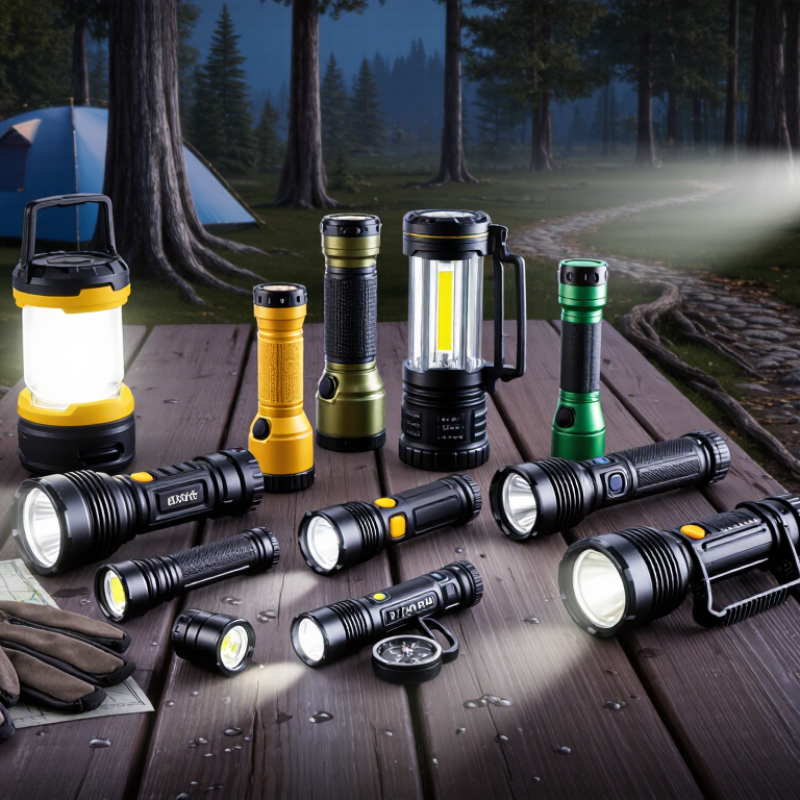
A compact pocket flashlight suits short walks, campsite chores, and quick checks inside a tent. A high-output handheld model can help reveal distant trail markers, but its brightest setting may drain the battery quickly. An adjustable-beam flashlight switches between a narrow spot and a broader view. A wide-beam model spreads softer light across a cooking area. Useful, but not for every job.

A headlamp keeps both hands free for setting up a tent or reading a map. A right-angle flashlight can clip to a strap or pocket, directing light where you work. For wet trails, choose a water-resistant model and check its stated rating; “weatherproof” alone can be vague. A rechargeable flashlight is convenient near a power source. Remote campsites may call for replaceable batteries instead. Small details matter.

A tail-standing flashlight can illuminate a tent ceiling, while a lantern-style flashlight offers broader camp lighting. That makes ten options, though features often overlap. No perfect choice. Match beam distance, weight, runtime, and charging method to the trip. I would not choose by advertised brightness alone; those figures rarely explain how long a light sustains its strongest setting. Test the controls before leaving, especially with gloves on, and carry a backup light. Cold weather can also shorten battery life, a detail that is easy to overlook.

Comparing Flashlight Designs, Power Sources, and Beam Types

10 Best Outdoor Flashlights for Camping and Hiking

Flashlight design matters when a trail turns rocky or a tent zipper catches in the dark. A compact, straight-bodied light fits a pocket, while a right-angle design can clip to a shoulder strap and keep both hands free. Headlamps are useful for cooking or reading a map, but their fixed beam may feel awkward when scanning distant trees. Small trade-offs add up.

Power source affects more than convenience. Rechargeable lithium-ion batteries reduce disposable-cell use, but cold weather can shorten their useful runtime. Replaceable alkaline or lithium cells are easier to swap on a multi-day hike, provided you pack spares and keep them dry. USB charging helps near a car or power bank; it is less helpful when you are far from either. I would not choose by battery type alone.

Beam claims need context. ANSI/PLATO FL 1-2019 defines beam distance as the point where illuminance reaches 0.25 lux, and runtime as the time until output falls to 10% of its initial level. These standardized measures make comparisons more useful, but they do not describe every trail. A focused beam can reveal a distant marker; a wide flood beam better lights nearby roots and camp gear. Check both patterns, not just the brightest number. A label can still mislead.

Safe Use and Basic Maintenance in the Field

Before dusk, test the flashlight with the batteries you plan to carry. ANSI/PLATO FL 1 measures runtime until output falls to 10% of its initial level. A listed ten-hour runtime therefore does not mean ten hours of full brightness. The standard also measures beam distance at 0.25 lux, a useful comparison point, not a promise of clear visibility through fog or trees. IEC 60529 defines IPX7 testing as temporary immersion in water up to one meter for 30 minutes. That rating does not guarantee protection from grit, salt water, or worn seals. Ratings help, but conditions matter.

Keep spare batteries dry and separated from metal objects, which can bridge terminals and cause overheating. Use only the battery type specified for the light, and replace cells with clean, dry hands. After rain, wipe the body and lens, then check the battery compartment for moisture or grit. Let everything dry before storage. Check the switch and seals, too; a tiny bit of mud can make a reliable light unreliable. Don’t force a stuck cap. Damaged or swollen rechargeable cells should not go back into service. Easy to overlook. A quick check takes little time, though people often skip it when camp is already set up.

10 Best Outdoor Flashlights for Camping and Hiking - Safe Use and Basic Maintenance in the Field
Type Typical Light Output Power Source Best Use Safe Use in the Field Basic Maintenance
Compact single-AA flashlight About 50–300 lumens, depending on mode and design One AA cell; some designs also accept a compatible rechargeable cell Lightweight hiking, tent tasks, and a simple backup light Use a low setting for nearby tasks and avoid shining it into anyone’s eyes. Remove disposable cells before long-term storage; wipe the lens and check the battery contacts.
Two-AA general-purpose flashlight About 100–500 lumens, depending on model and mode Two AA cells, usually alkaline or compatible rechargeable cells A versatile camp light for walking, cooking, and finding gear Carry spare cells in a case so their terminals cannot touch metal objects. Do not mix old and new cells or different cell types; keep the battery compartment dry.
Rechargeable 18650 flashlight About 300–1,500 lumens on selectable modes One protected or otherwise manufacturer-approved 18650 lithium-ion cell Frequent trips where rechargeable power and a compact body are useful Use only the cell type and charging method specified for the light; keep spare cells individually protected. Keep the cell away from heat, water, and loose metal; stop using a swollen, damaged, or unusually hot cell.
High-capacity 21700 flashlight About 500–2,000 lumens on selectable modes One compatible 21700 lithium-ion cell Longer outings that benefit from a larger rechargeable battery High-output modes can heat the light quickly; use them briefly and keep the head away from skin and fabric. Charge with a compatible charger, inspect the cell wrapper, and follow the maker’s storage guidance.
Rechargeable headlamp About 100–600 lumens, often with lower-output settings Built-in rechargeable battery or compatible replaceable cells Hands-free hiking, setting up camp, and night-time chores Aim the beam at the path, not at other hikers; use a low mode around camp. Wash or wipe the strap according to its care instructions and dry the lamp before storage.
Right-angle or clip-on flashlight About 100–800 lumens, depending on configuration Commonly a rechargeable lithium-ion cell or built-in battery Hands-free camp work when attached to a strap, pocket, or suitable surface Check that the clip is secure before moving; do not attach the light where it could snag. Clear dirt from the clip and charging port; replace damaged seals or covers before wet use.
Compact camping lantern About 50–500 lumens, usually spread widely for area lighting Replaceable cells or a built-in rechargeable battery Even light inside a tent or around a campsite table Place it on a stable surface and keep it away from stoves, flames, and enclosed heat sources. Keep the diffuser clean and dry; check charging covers and battery contacts before each trip.
Focused-beam handheld flashlight About 200–1,000 lumens, with beam distance varying by reflector and mode AA cells or a compatible rechargeable lithium-ion cell Checking a trail ahead or locating distant landmarks where appropriate Avoid aiming toward roads, aircraft, wildlife, or people; use a wider, lower beam near others. Clean the lens with a soft cloth and inspect the body for cracks after drops.
Water-resistant outdoor flashlight About 100–1,000 lumens, depending on size and mode Replaceable cells or a rechargeable battery Rainy hikes and damp campsites when the stated protection rating is suitable Water resistance is not the same as waterproofing; follow the product’s stated limits and keep ports closed. After exposure to water or mud, dry the exterior and check seals before opening the battery compartment.
Small backup flashlight About 10–150 lumens Coin cells, AAA cells, or a small rechargeable battery, depending on design An emergency light kept in a first-aid kit or pack pocket Store securely to prevent accidental activation and keep small cells away from children. Test it before each trip; remove disposable cells if it will be stored for an extended period.

Note: Output figures are broad, typical ranges for these flashlight categories, not guaranteed specifications. Actual brightness and runtime vary by design, battery condition, temperature, and selected mode. Always follow the instructions supplied with the light and battery.

REQUEST A QUOTE

Menu
[all-fields]