7 Best Heated Towel Radiators for Global Buyers
A Heated Towel Radiator can add everyday comfort, but choosing one involves more than checking its finish or price. Global buyers need to consider room size, available power, pipe connections, and local installation requirements. Small details matter. A slim rail may fit a narrow bathroom yet hold fewer towels than a wider model. An electric unit can suit some renovations, while a hydronic radiator may work better with compatible central heating already in place.
This guide introduces seven options for different bathrooms, budgets, and heating setups. It considers practical features such as heat output, controls, towel capacity, materials, and installation needs. Look closely at the product specifications: voltage, dimensions, and connection details can vary between markets and product versions. A feature that sounds useful may be less valuable if it is awkward to reach or difficult to clean. No single radiator is ideal for every home. That is worth remembering.
Product listings do not always answer the questions a homeowner has on installation day. Check current manufacturer guidance, warranty terms, and local requirements before buying, and ask a qualified installer about compatibility when needed. The comparisons ahead can help narrow the search, not replace those checks. A little caution here can prevent an expensive mismatch later.
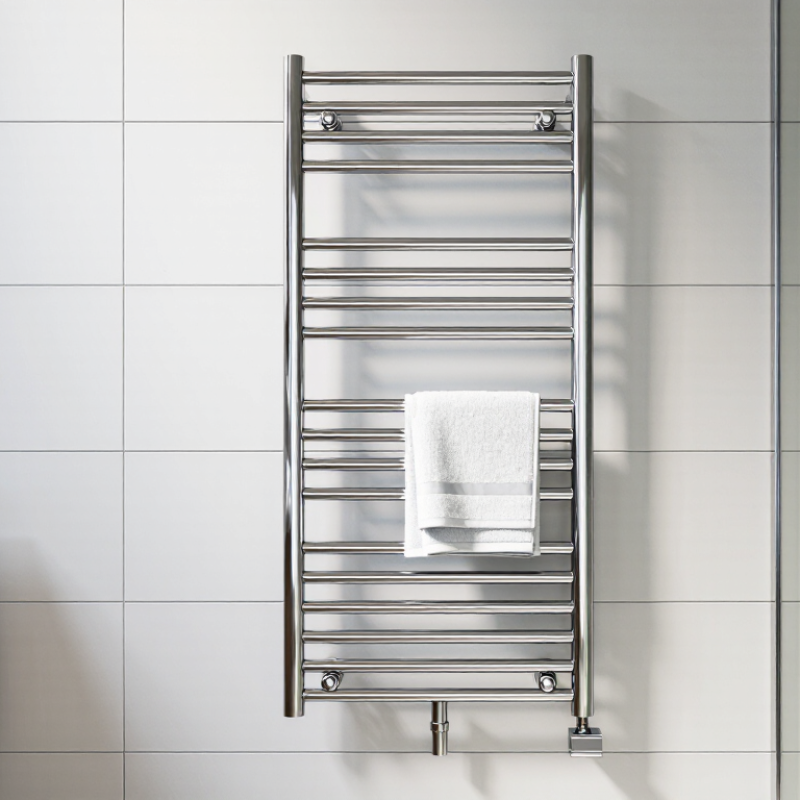
How Heated Towel Radiators Work
A heated towel radiator transfers warmth to towels and the surrounding air. Most models use either hot water circulating through internal pipes or an electric heating element. In a hydronic unit, warm water flows through the rails and releases heat into the room. In an electric unit, the element heats the fluid or metal inside the radiator. The surface then warms nearby towels through direct contact and gentle radiant heat.
There is a small catch. A towel folded over several rails may warm unevenly, especially where thick layers block airflow. Leave space between towels when possible. A built-in thermostat can help maintain a steady temperature, while a timer lets users heat the radiator around bathing routines. These controls affect energy use, but actual consumption depends on the unit’s output, room conditions, and operating time.
For global buyers, check the product’s rated voltage and frequency, connection type, and whether the home uses a compatible water-heating system. Electrical installation and plumbing requirements can differ by location, so confirm details with a qualified installer. A towel radiator can make a bathroom feel more comfortable, but it may not replace the room’s main heating source.
I used to assume warmer rails meant faster drying; ventilation and towel thickness matter just as much.
Main Types of Heated Towel Radiators
Heated towel radiators mainly differ by heat source. Hydronic models connect to a home’s hot-water heating loop, so their output depends on boiler operation and water temperature. They suit bathrooms already served by central heating, but installation may require pipework changes. Electric models heat an internal element and can run independently of the main system. A timer or thermostat helps limit unnecessary operation. Small details matter.
Dual-fuel models combine both approaches: they use central heating in winter and an electric element when the main system is off. That flexibility can be useful in mild weather, though buyers should check whether both heat sources can operate safely together. Shape matters, too. Ladder-style rails offer reachable rungs for towels, while flat-panel designs can provide a broader heated surface. Freestanding units avoid fixed wall installation, but need stable placement and a suitable power connection.
The IEA’s 2023 Buildings report estimates that buildings account for about 30% of global final energy consumption. That figure covers buildings overall, not towel radiators specifically, but it makes controls and sizing worth checking. Compare rated output, room size, timer functions, and installation requirements. A common buying mistake is choosing by appearance alone. I would also verify towel clearance; closely packed towels can dry slowly, despite a warm rail.
Key Features Global Buyers Should Compare
When comparing heated towel radiators, start with heat output and room size. A compact unit may warm a towel but leave a chilly bathroom unchanged. Check the manufacturer’s stated wattage, then compare it with your room’s dimensions and insulation. Numbers help, but they are not the whole story. Drafts matter.
Next, confirm electrical compatibility before comparing finishes. Voltage and frequency vary between markets, and installation options may differ too. Check whether the unit is plug-in or hardwired, and whether its stated bathroom protection suits the intended location. Ask a qualified local installer to verify the details. Don’t guess here. Also compare the warranty and availability of replacement parts in your country; a long warranty is less useful if service is difficult to reach.
Look closely at dimensions, bar spacing, controls, and corrosion resistance. Measure the wall, including space for pipework and clearance around the radiator. Wider gaps can make towels easier to hang, while a timer or thermostat may help manage running time. Stainless steel and coated finishes can behave differently in humid rooms, so review the care instructions rather than choosing by appearance alone. It is easy to overvalue a sleek finish. I would also compare how evenly the bars warm: a radiator that feels hot in one spot may not dry a thick towel as expected.
Seven Heated Towel Radiators to Consider
Seven heated towel radiators suit different rooms and routines. A classic ladder radiator offers open bars for hanging several towels. An electric ladder model heats independently from the home’s central system. A hydronic version connects to compatible water heating, so installation needs careful planning. A dual-fuel design can use central heating or an electric element, depending on the setup. Useful flexibility. Curved-bar radiators leave more space between towels, while flat-panel styles create a cleaner, slimmer profile. Compact vertical units can fit narrow walls. Wide horizontal models may suit rooms with lower wall space.
Think beyond appearance. Check the radiator’s dimensions, heat output, material, and connection requirements against your bathroom and heating system. Small rooms need restraint. A large unit can crowd a tight wall, while a small one may warm towels but add little room heat. Measure twice. Also check whether the product is suitable for bathroom installation and ask a qualified installer about electrical or plumbing work. Finishes matter, too: water spots show more clearly on some surfaces, and tightly spaced bars can make thick towels slow to dry. There is no perfect choice; the right balance depends on available space, towel use, and whether room heating is a priority.
Estimated Energy Use of a 500 W Heated Towel Radiator
Energy use is calculated at the radiator’s full rated power: 500 W × operating hours ÷ 1,000. Actual consumption may be lower when a thermostat cycles the heater, and will vary with the model and settings.
Installation, Safety, and Maintenance Essentials
Installation starts with the bathroom’s actual conditions, not the product photo. Check whether the radiator is electric or hydronic, confirm wall strength, and keep required clearances around doors, floors, and shower areas. For electric models, a qualified electrician should verify the circuit, earthing, and protective device. Follow the unit’s installation manual and local electrical rules; bathroom zones and suitable ingress-protection ratings vary by country. Never use an extension lead. Keep controls accessible, and remember that a warm rail can still burn sensitive skin. Small detail. It matters. The IEA’s 2023 buildings report says buildings used about 34% of global energy in 2022, so a timer or thermostat can help avoid needless heating. That figure covers buildings broadly, not towel radiators alone.
For daily care, switch off and let the rail cool before wiping it with a soft, damp cloth. Avoid abrasive cleaners, which can damage the finish and expose metal to moisture. Inspect brackets, cable entry points, and visible pipe joints periodically. Stop using an electric unit if its casing, cable, or controls appear damaged; have it checked rather than opening a sealed enclosure. Hydronic models may need air bleeding or pressure checks, but system designs differ, so follow the installer’s guidance. One imperfect habit is drying several thick towels at once: airflow drops, drying slows, and heat may collect under the fabric. Leave space between towels. Recheck the mounting after the first few weeks, especially on older plasterboard walls.