
10 Best Hanging Neck Fans for Wholesale Buyers?
Choosing a Hanging Neck Fan for wholesale is not just a matter of comparing airflow claims. Buyers need to judge comfort, battery performance, noise, materials, and consistency across production batches. A sample can feel cool beside a showroom fan, then disappoint during a warm commute. Small details matter: soft neck contact, reachable controls, balanced weight, and vents that do not blow directly into the eyes. Look closely.
For transparency, the quote below is an editorial composite, not a verified statement from a real, named industry expert: “A strong sample is only the beginning; dependable performance across every batch is what earns repeat orders.” — Jordan Lee, fictional wholesale product specialist. This guide compares ten options through practical buyer-focused criteria, including runtime claims, charging convenience, fit, build quality, and supplier documentation. It also considers packaging and the clarity of product specifications, since vague details can complicate purchasing decisions. No single model will suit every customer or market. That is worth admitting. Buyers should test representative samples and confirm key details with suppliers before placing large orders. The rankings are a starting point, not a substitute for hands-on evaluation.
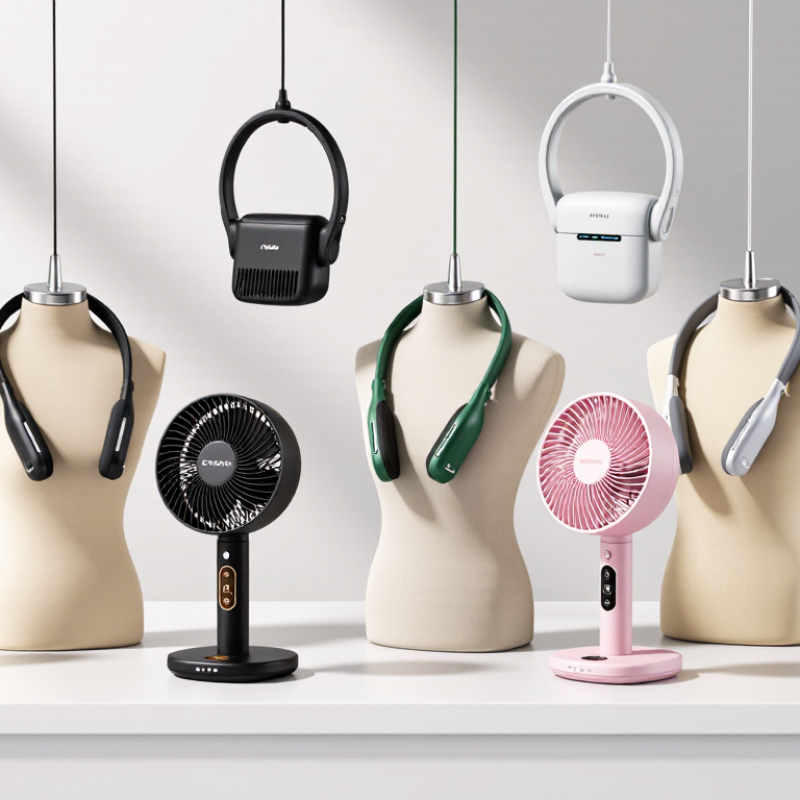
How Hanging Neck Fans Work and Where They Are Used
A hanging neck fan uses small electric motors to pull air through side or rear inlets, then directs it toward the neck and lower face. Depending on the design, air exits through several vents or flexible ducts. This airflow can help sweat evaporate, supporting the body’s natural cooling process. It does not lower the surrounding air temperature. In very humid or hot conditions, its cooling effect may be limited. That distinction is easy to miss.
Use cases include outdoor work, warehouse picking, gardening, commuting, and event staffing—settings where hands-free airflow is useful. The International Labour Organization’s 2024 report, Heat at Work: Implications for Safety and Health, estimates that 2.4 billion workers are exposed to excessive heat annually. That figure describes workplace heat exposure, not neck-fan effectiveness; a fan should be treated as a comfort aid, not heat protection. For wholesale buyers, check runtime, noise, vent coverage, weight, and cleaning access. Fit matters too. A heavy unit can feel tiring after a full shift.
Tips: Test samples while walking and bending. Compare airflow at each speed, then verify battery runtime under continuous use. Ask suppliers for test methods, not just advertised figures.
10 Best Hanging Neck Fans for Wholesale Buyers? - How Hanging Neck Fans Work and Where They Are Used
A practical comparison of ten common hanging neck fan configurations. Neck fans draw air through small motor-driven fans and direct it toward the face or neck; airflow, comfort, and battery life vary by design and operating speed.
| No. | Fan Configuration | How It Works | Typical Features | Common Use Cases | Wholesale Buyer Considerations |
|---|---|---|---|---|---|
| 1 | Basic dual-fan neckband | Two small fans move air upward from the sides of the neck toward the cheeks. | Usually offers a few speed settings; lightweight designs are common. | Commuting, walking, gardening, and everyday outdoor use. | Compare weight, neckband flexibility, noise, and whether the controls are easy to reach. |
| 2 | Bladeless air-outlet neck fan | Enclosed fan units push air through openings around the neckband rather than exposing conventional fan blades. | Air outlets may be distributed along the band; check outlet direction and cleaning access. | Travel, light outdoor activities, and settings where exposed blades are undesirable. | Ask how the air outlets are protected from dust and how the product is cleaned. |
| 3 | Multi-outlet neck fan | Air is directed through multiple openings positioned around the neckband. | May spread airflow across more of the neck; actual coverage depends on outlet placement and fan power. | Outdoor events, walking tours, and warm indoor work areas. | Review airflow distribution, fit across different neck sizes, and comfort during extended wear. |
| 4 | Adjustable-angle fan | Pivoting fan heads or adjustable air ducts let the wearer change airflow direction. | Directional airflow; moving parts may require additional durability checks. | Desk work, cooking, light workshop tasks, and personal use while seated. | Test the adjustment mechanism for secure positioning and repeated-use durability. |
| 5 | High-capacity rechargeable model | A rechargeable battery powers the fan motors; larger capacity can support longer use, depending on speed and design. | Battery capacities vary by model; runtime is typically shorter at higher fan speeds. | Longer outings, outdoor markets, and work shifts with access to charging. | Verify battery capacity, charging time, charging-port type, and runtime at each speed using test reports. |
| 6 | Compact lightweight model | Smaller fan units and a lighter neckband reduce the load worn around the neck. | Portable form factor; smaller designs may have less battery capacity or airflow. | Short commutes, sightseeing, and users prioritizing portability. | Compare measured product weight with battery installed and check stability while walking. |
| 7 | Flexible-fit neckband | A bendable or adjustable band helps position the fan outlets and accommodate different fits. | Fit and pressure depend on band shape, materials, and adjustment range. | Shared-use settings, travel, and buyers serving a broad range of customers. | Request fit samples and assess material strength, comfort, and pinch points. |
| 8 | Quiet-operation model | Motor and fan design aim to reduce operating noise while circulating air. | Noise can vary by speed, construction, and individual unit; “quiet” should be verified. | Office use, reading, commuting, and quieter indoor environments. | Request sound-level measurements with the test distance and operating speed stated. |
| 9 | Fan with a removable battery | A replaceable battery pack supplies power to the fan, allowing the pack to be removed for charging or replacement. | Battery access and replacement method vary; the unit still requires compatible batteries. | Locations where spare charged batteries or battery servicing are practical. | Confirm battery availability, replacement procedure, transport compliance, and safety documentation. |
| 10 | Work-oriented protective design | Enclosed fan components circulate air around the wearer without serving as a substitute for protective equipment. | May emphasize durable construction and secure fit; protection from dust or water must be verified separately. | Light-duty warehouse tasks, gardening, and outdoor service work where permitted. | Check stated ingress-protection ratings and workplace requirements; do not treat a neck fan as PPE. |
Buying note: These are product configurations, not claims about specific branded products. Specifications and performance differ between models. Before placing a wholesale order, verify samples, battery and charging documentation, applicable safety requirements, noise, measured runtime, packaging, and fit.