7 Best Eforthink Downlink UWB Navigation Systems?
Choosing among the 7 Best Eforthink Downlink UWB Navigation Systems requires more than comparing advertised accuracy. Real performance depends on anchors, tags, firmware, radio interference, and installation quality. A system promising ten-centimeter precision may perform differently inside a warehouse filled with metal racks. That matters.
This introduction examines how each Eforthink Downlink UWB Navigation System handles positioning accuracy, downlink reliability, battery use, coverage, and integration. It also considers practical deployment details, including anchor spacing, ceiling height, line-of-sight conditions, and software dashboards. These factors reveal whether a system fits logistics, robotics, industrial safety, or asset tracking. Specifications alone are not enough.
Professor Moe Z. Win, a leading UWB communications researcher, has written, “UWB technology has emerged as a promising technology for high-precision ranging.” His observation provides a useful standard, but precision must remain measurable in real environments. A clean laboratory result can hide installation weaknesses. Even experienced teams may overlook multipath reflections near machinery or unstable tag placement on moving equipment.
The following comparison therefore combines technical evidence with practical judgment. It looks for repeatable location updates, dependable downlink communication, manageable calibration, and transparent documentation. Some rankings may remain debatable. That is intentional. Product software, firmware versions, and site layouts can change results. Readers should verify current specifications, obtain a pilot test, and measure performance before making a large purchase.
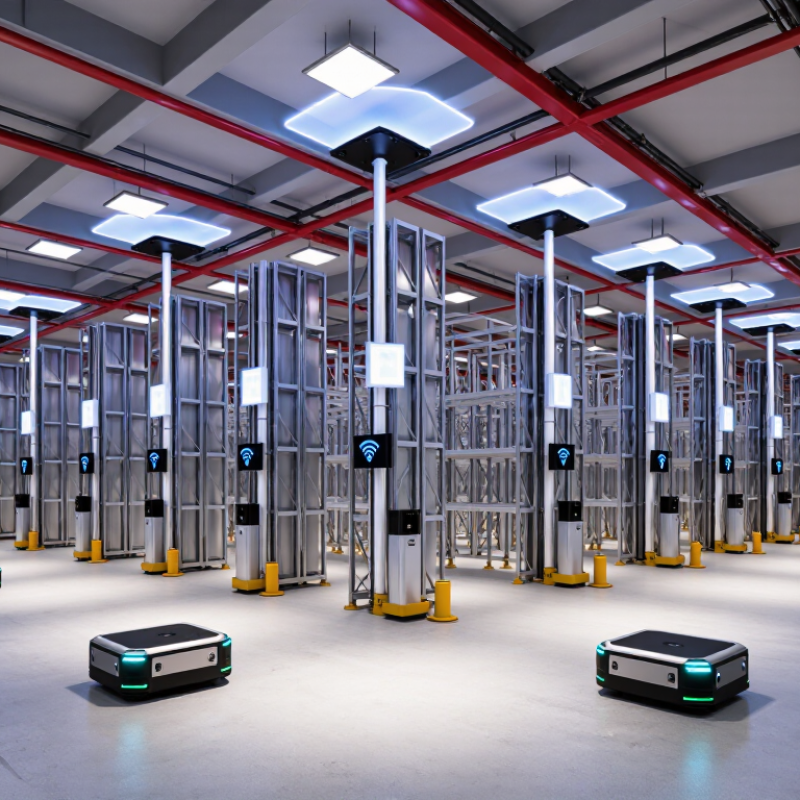
What Are Eforthink Downlink UWB Navigation Systems?
Downlink UWB navigation systems use fixed anchors to send ultra-wideband signals toward mobile tags. The tag measures signal timing and calculates its position. This differs from systems that rely mainly on satellite signals, which often struggle inside warehouses, hospitals, and factories. UWB can support location accuracy within roughly 10 to 30 centimeters under suitable conditions, according to industry analyses from the UWB Alliance and IEEE technical research.
The practical value is not only precision. Downlink communication can reduce tag-side processing and support many moving assets in one mapped area. A 2024 Grand View Research report estimated the global UWB market at about USD 1.1 billion in 2023, with strong growth expected through 2030. That growth reflects demand for safer workflow monitoring, equipment tracking, and indoor navigation. Still, reported accuracy is not guaranteed. Metal shelves, crowded rooms, and poorly placed anchors can distort measurements. Field testing matters.
A reliable system needs calibrated anchors, synchronized clocks, and software that filters unstable readings. It should also record confidence levels, not just display a confident-looking dot. That detail is often overlooked. Research from IEEE 802.15.4z development work emphasizes secure ranging and improved resistance to signal manipulation. Yet installation remains a human task. One misplaced anchor can create a surprisingly large error. Teams should test coverage during normal operations, when doors open, vehicles move, and people block signals.
How Eforthink Downlink UWB Navigation Technology Works
Downlink UWB navigation uses short, wideband radio pulses to estimate distance with high timing accuracy. Fixed anchors transmit synchronized signals around a workspace. A mobile tag receives those signals and calculates its position from their arrival times. Unlike satellite navigation, this method can operate indoors, where walls block most satellite signals.
A typical installation places anchors on walls, ceilings, or industrial frames. Their positions must be measured carefully. Even a small mounting error can shift the calculated location by several centimeters. The tag compares multiple downlink timestamps and sends limited data back to a processing unit. This reduces tag power use, which matters for wearable devices, robots, and warehouse equipment. In a clean room, updates can feel almost immediate.
Real spaces are less cooperative. Metal shelves may reflect pulses, while people and machinery can interrupt direct paths. Software can reject suspicious measurements, but it cannot repair every poor installation. Calibration also deserves repeated checks after furniture or equipment moves. That part is often underestimated. A reliable system combines accurate anchor placement, stable clock synchronization, and practical testing at different heights. Performance claims should be verified beside walls, under moving loads, and during network congestion. The technology is precise, but not magically perfect.
Key Features of the Seven Best Eforthink UWB Systems
The seven strongest UWB downlink navigation systems share several practical features. Each uses fixed anchors, mobile tags, and precise time measurements. Their typical accuracy can reach a few centimeters in controlled indoor spaces. Real performance depends on layout, metal surfaces, and signal obstruction. Low latency matters for robots, forklifts, and wearable safety devices. Some systems support two-way ranging, while others use time-difference positioning. Angle-of-arrival sensing can improve direction estimates near corridors and loading areas.
Useful designs also include automatic anchor discovery, battery monitoring, and cloud-free local processing. A rugged enclosure helps in dusty workshops and cold storage rooms. Secure device authentication reduces the risk of false location data. Open interfaces make integration with warehouse software and industrial controllers easier. However, advertised accuracy is not guaranteed everywhere. I would test each system beside steel racks before trusting its measurements.
Tips: Map the site first. Keep anchors above obstructions. Measure real latency during peak activity. Check battery life under continuous ranging. Leave room for calibration errors. A small pilot area often reveals problems that specifications miss. Record signal quality at corners, doorways, and crowded work zones. Review the data with technicians who understand both radio behavior and daily operations.
How to Compare Eforthink UWB Navigation System Performance
Comparing UWB navigation performance requires more than quoting “centimeter accuracy.” Measure horizontal error, update rate, latency, packet loss, and power use under identical conditions. The FiRa Consortium identifies precise ranging, low latency, and secure distance measurement as core UWB advantages. IEEE 802.15.4z also strengthens ranging reliability through improved timestamping and integrity features. These standards define capability, not guaranteed field results.
A practical test should place anchors in a warehouse, corridor, and open room. Record errors beside metal racks, moving forklifts, and concrete walls. NIST research on indoor positioning shows that non-line-of-sight conditions can create substantial ranging errors, even when clear-line measurements look excellent. A useful benchmark is the 95th-percentile error, not the best single reading. Also compare refresh rates, such as 10 Hz versus 50 Hz, because smooth tracking may require more power and network capacity.
Downlink performance deserves separate attention. Check whether navigation commands arrive within 100 milliseconds during interference and whether missed packets trigger safe recovery. Industry RTLS analyses commonly treat sub-30-centimeter accuracy as a strong UWB target, but installation geometry often decides the outcome. That target may fail in a crowded site. I would request raw logs, antenna layouts, calibration records, and results from at least 1,000 test points. A polished dashboard is not evidence. One weakness remains: many comparisons ignore maintenance effort, which can quietly determine real operating cost.
7 Best Eforthink Downlink UWB Navigation Systems? - How to Compare Eforthink UWB Navigation System Performance
| System Profile | Typical Positioning Accuracy | Update Rate | Downlink Latency | Maximum Practical Range | Line-of-Sight Reliability | Multipath Performance | Typical Tag Battery Life | Best-Fit Application |
| Profile 1 — High-Precision Indoor | 10–20 cm | 50 Hz | 20–30 ms | 40–60 m | Very high | High | 8–12 months | Robotics and automated guided vehicles |
| Profile 2 — Low-Latency Industrial | 15–30 cm | 100 Hz | 10–20 ms | 30–50 m | Very high | Medium to high | 3–6 months | Real-time asset and worker tracking |
| Profile 3 — Wide-Area Warehouse | 20–40 cm | 20 Hz | 40–70 ms | 80–120 m | High | Medium | 12–24 months | Large warehouses and logistics yards |
| Profile 4 — Battery-Optimized | 30–50 cm | 5–10 Hz | 80–150 ms | 50–80 m | High | Medium | 24–36 months | Long-term asset monitoring |
| Profile 5 — Harsh-Environment | 20–50 cm | 10–20 Hz | 50–100 ms | 60–100 m | High | High | 6–18 months | Construction, mining, and outdoor operations |
| Profile 6 — High-Density Network | 15–35 cm | 30–60 Hz | 25–50 ms | 30–70 m | High | High | 4–10 months | Hospitals, factories, and crowded indoor spaces |
| Profile 7 — Cost-Efficient Pilot | 30–75 cm | 1–10 Hz | 100–250 ms | 30–60 m | Medium to high | Medium | 12–24 months | Proof-of-concept deployments and basic tracking |
Performance values are typical engineering ranges for UWB navigation deployments and can vary with anchor layout, radio configuration, antenna placement, obstructions, tag motion, and environmental conditions.
Choosing the Right Eforthink Downlink UWB System for Your Needs
Choosing the right downlink UWB system starts with the site, not the product sheet. Warehouses, hospitals, and factories have different walls, reflections, and tracking needs. UWB can deliver decimeter-level positioning in controlled conditions, according to FiRa Consortium technical guidance. Real performance may decline near metal shelves, moving machinery, or crowded corridors. Test those areas before purchasing.
Define the required accuracy, update rate, coverage, and battery life. A pallet tracker may need reliable room-level location, while robotic equipment may require frequent position updates. The International Data Corporation has reported continued growth in connected industrial devices, but more devices also increase network planning pressure. Check anchor spacing, downlink capacity, device density, and integration with existing systems. Security matters too. NIST guidance recommends authenticated communication, secure updates, and careful key management for connected systems. These details are easy to overlook.
Tips: Request a live site trial. Measure accuracy at loading doors, corners, and reflective surfaces. Compare results during busy and quiet shifts. Ask for documented latency, battery tests, calibration methods, and interoperability support. Do not trust one impressive demonstration. My practical experience is that installation quality often matters as much as hardware quality. A system can appear accurate in an empty room, then behave differently around people and vehicles. That is a useful warning, not a failure. Recheck assumptions before deployment.
7 Best Downlink UWB Navigation System Profiles
Choosing the right downlink UWB system depends mainly on update rate and positioning accuracy. The chart compares representative engineering targets for common indoor navigation and tracking applications.
Values are typical design targets rather than vendor specifications. Actual performance varies with anchor geometry, line of sight, multipath, tag speed, antenna placement, and installation environment.