
China Best Commercial Flood Lights Supplier for Buyers

Choosing a China-based supplier for Commercial Flood Lights is not just a price comparison. Buyers need to assess performance, production consistency, and support after delivery. A floodlight may look suitable in a catalog, yet perform differently on a warehouse wall or outdoor loading area. Ask for clear product data, including wattage, lumen output, beam angle, color temperature, and ingress protection rating. Real installation requirements matter.

Details matter.

For larger orders, request sample units and review the actual light distribution before confirming specifications. Check how the supplier handles driver selection, heat management, housing materials, and replacement parts. These details can affect service life and maintenance costs. Ask for relevant test reports and certification documents, then confirm that they match the exact model being quoted. A careful supplier should explain limits as well as strengths. Be wary of broad claims without supporting evidence.

There is no single “best” supplier for every buyer. A contractor may prioritize delivery schedules and consistent batches, while a distributor may need flexible packaging and responsive communication. Compare quotations against the same technical requirements, not only the unit price. It is also reasonable to question unclear lead times or unusually high performance claims. Some information may still need verification. This guide explores practical ways to evaluate Chinese Commercial Floodlight manufacturers, ask useful questions, and make a more informed purchasing decision.
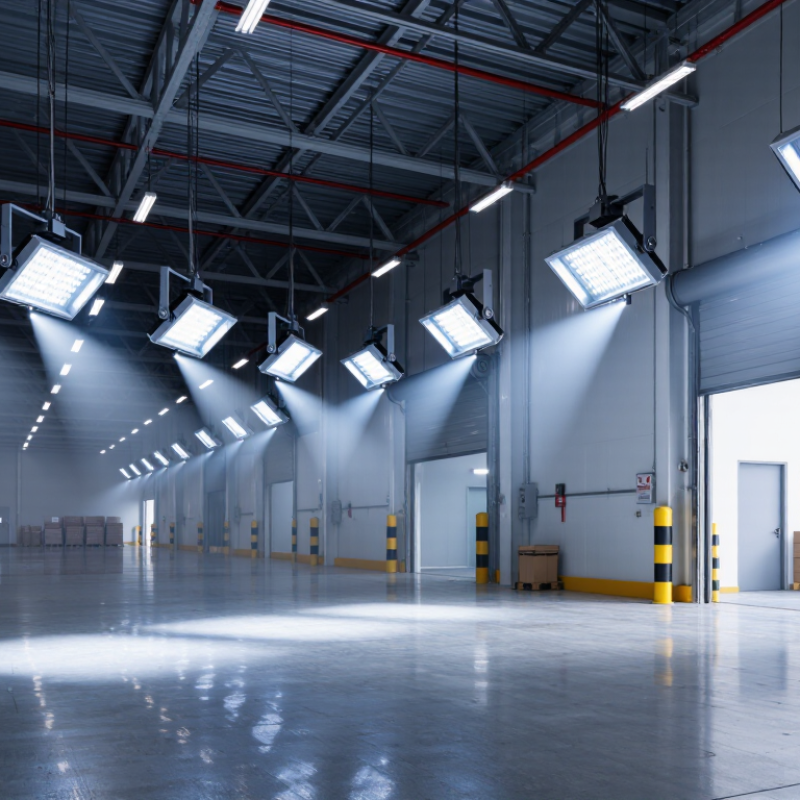
China Best Commercial Flood Lights Supplier for Buyers

Understanding Commercial Flood Lights and Their Applications

China Best Commercial Flood Lights Supplier for Buyers

Understanding Commercial Flood Lights and Their Applications

Commercial flood lights use broad, powerful beams to illuminate outdoor areas that need consistent visibility. Common applications include parking lots, loading docks, sports grounds, building facades, and construction sites. Each setting has different needs. A loading dock may require bright, even light, while a facade benefits from carefully aimed beams that reduce spill.

Choosing a fixture involves more than comparing lumen ratings. Mounting height, beam angle, color temperature, and weather resistance all affect performance. For example, a high pole needs optics suited to wider coverage, while a wall-mounted light may need a narrower beam to limit glare. Check the fixture’s ingress protection rating and heat management details for exposed locations. These details matter.

One detail is easy to miss: aiming. Poorly directed light can create dark patches or shine into nearby windows. A site plan and a nighttime test can reveal issues that product specifications cannot. Even then, adjustments may be needed. That is normal. Buyers should compare measured output, warranty terms, and technical support, not just advertised brightness.

How to Evaluate Commercial Flood Light Suppliers in China

China Best Commercial Flood Lights Supplier for Buyers

How to Evaluate Commercial Flood Light Suppliers in China

Supplier evaluation should start with evidence, not a polished catalog. The IEA’s Energy Efficiency 2023 analysis estimates that lighting accounts for about 15% of global electricity use. That makes efficacy and operating hours practical buying concerns. Request test reports showing lumens, watts, beam angle, and color temperature, then compare them under the same conditions. A photometric file is useful. So is a sample tested outdoors after dark.

Check whether the supplier can explain its LED driver, thermal design, and protection ratings in plain terms. Ask for the IES file and independent test documentation, such as an LM-79 report where applicable. Confirm the stated IP rating matches the product configuration you will order. Also inspect cable glands, seals, and fasteners; these small parts often face rain, dust, and vibration first. A common mistake is treating a long warranty as proof of quality. It is not.

Ask for production records, quality-control checkpoints, and written details on warranty exclusions and spare parts. If possible, audit the factory or use a third-party inspection before shipment. Compare the same specification across quotations, including surge protection and mounting hardware. IEA data gives a useful reason to scrutinize efficiency, but it cannot predict your site’s savings. I would still verify the actual beam pattern on the target surface; paperwork can look convincing, and sometimes it misses the real installation.

Comparing Product Quality, Certifications, and Technical Support

When comparing commercial floodlight suppliers in China, look beyond advertised wattage and lumen output. Ask for test reports showing efficacy, beam angle, color temperature, and performance at operating temperature. A fixture rated for high output may still create dark patches if its optics do not suit the mounting height. Check housing materials, gasket design, and corrosion protection, especially for coastal or industrial sites. Small details matter.

Request certificates and verify that they cover the exact model, not just a similar product family. Confirm the testing body, report number, and applicable product scope. Requirements can differ by destination market, so buyers should check local project specifications before ordering. I may be overcautious, but paperwork deserves a close read.

Technical support is part of the product. Ask whether the supplier can provide photometric files, wiring diagrams, installation guidance, and clear warranty terms. For a large project, test samples in a real mounting position before committing to volume. Also ask how replacement parts and troubleshooting are handled after delivery. Fast replies help, but precise answers matter more. A supplier that admits a limitation is often easier to assess than one promising everything.

China Best Commercial Flood Lights Supplier for Buyers - Comparing Product Quality, Certifications, and Technical Support
Evaluation Dimension Entry-Level Offering Mid-Range Offering Project-Grade Offering What Buyers Should Verify
Typical System Efficacy Approximately 100–130 lm/W Approximately 120–160 lm/W Approximately 140–180 lm/W Check the complete luminaire’s measured efficacy, not just the LED package specification. Request a model-specific photometric test report.
Common Power Range About 30–200 W About 50–400 W About 100–1,000 W, depending on design and application Confirm input power, delivered lumens, mounting height, aiming angle, and the required light levels for the site.
Ingress Protection IP65 is a common minimum for outdoor models IP66 is common for models designed for heavier outdoor exposure IP66 or higher, as appropriate to the specified environment IP ratings are defined by IEC 60529. Verify the test report applies to the complete luminaire and its installed cable entries and seals.
Impact Protection May be unspecified or vary by model IK08 is a practical level to request where impact resistance matters IK08–IK10 may be specified for exposed or high-risk locations IK ratings are defined by IEC 62262. Ask for a model-specific test report; do not infer impact resistance from housing material alone.
Housing and Thermal Design Cast or fabricated housing; assess heat dissipation and finish quality Aluminum housing with documented thermal design and corrosion-resistant finish Application-specific housing, thermal validation, and finish requirements Request housing material details, operating-temperature limits, corrosion-test information where relevant, and evidence of thermal testing.
Optics and Light Distribution Basic beam options; confirm suitability for the target area Several beam distributions may be available Photometric options selected for the site layout and glare-control needs Request an IES or LDT file and a lighting calculation. Check beam angle, uniformity, glare, spill light, and aiming requirements.
Color and Rendering Common choices include 3,000 K, 4,000 K, and 5,000 K; CRI often varies by model More color-temperature and color-rendering options may be available Project-specific color requirements and documented consistency may be offered Confirm correlated color temperature, CRI, tolerance, and consistency requirements on the exact product datasheet and purchase specification.
Reliability Evidence Warranty and lifetime claims may be limited; review the supporting documentation Request documented component and luminaire testing Request test evidence and clearly defined warranty conditions for the project LM-80 reports cover LED packages, arrays, or modules; TM-21 is used to project lumen maintenance. Neither alone proves the lifetime of the complete luminaire.
Safety and Performance Standards Ask which applicable standards were used for design and testing Request reports against relevant luminaire safety and performance standards Require documentation matched to the product, installation, and destination market IEC 60598-1 covers general luminaire requirements; IEC 60598-2-5 covers floodlights. Confirm the applicable edition and report scope.
Market Access Documentation Documentation may depend on the destination market and product configuration Request destination-market declarations and applicable test reports Confirm all required approvals and documentation before shipment For the EU, CE marking is a manufacturer’s conformity declaration under applicable legislation, not a general quality certification. For North America, check applicable requirements such as UL 1598 or CSA C22.2 No. 250.0.
Warranty and Replacement Terms Compare the written term, exclusions, and remedy process Request a clearly stated warranty covering the specified product and operating conditions Agree project-specific warranty, spare-parts, and replacement arrangements in writing Warranty length alone does not establish product quality. Check coverage, labor and freight responsibility, claim evidence, and response procedure.
Technical Support Confirm access to datasheets, wiring information, and installation guidance Request application support, photometric files, and a named technical contact Agree on project review, lighting calculations, commissioning guidance, and a documented escalation path Set response-time expectations in the purchase agreement or service-level terms; support capability varies by supplier and project.
Sample and Production Quality Control Inspect a sample before ordering and define acceptance criteria Request inspection records and confirmation that production matches the approved sample Agree on incoming, in-process, and final inspection requirements for the project Verify model number, driver and LED configuration, labeling, packaging, and batch traceability against the approved specification.
Buyer note: Specification bands are indicative comparison ranges, not guaranteed supplier capabilities or universal product classes. Actual performance, certifications, warranty terms, and technical support vary by model, configuration, destination market, and contract. Verify current, model-specific documents before purchase.

Assessing Pricing, Customization, and Minimum Order Requirements

China Best Commercial Flood Lights Supplier for Buyers

Assessing Pricing, Customization, and Minimum Order Requirements

Commercial flood light pricing depends on more than wattage. Buyers should compare housing material, driver quality, beam angle, ingress protection, and included accessories. A 150-watt fixture with a narrow beam may serve a loading bay differently from one lighting a broad parking area. Ask suppliers to quote the same specifications. Otherwise, a low unit price may hide meaningful differences.

Customization can include cable length, mounting brackets, color temperature, packaging, or labeling. Each change may affect cost and lead time. Request a written specification and a sample when the design is important. Samples take time. That can feel inconvenient, but it may reveal glare, finish, or installation issues before a larger order.

Minimum order quantities also vary. Some suppliers accept a small trial batch at a higher unit price; others require standard production quantities. Ask whether mixed wattages count toward the minimum, and confirm packaging and shipping costs separately.

One detail is easy to miss: a custom feature may have its own minimum, even when the fixture quantity seems manageable. Compare the full landed estimate, not just the product price. Be cautious with assumptions; an early quote is only as reliable as the specifications behind it.

Planning Supplier Verification, Shipping, and After-Sales Service

China Best Commercial Flood Lights Supplier for Buyers

Planning Supplier Verification, Shipping, and After-Sales Service

Before ordering, verify the factory address, production capacity, and the legal entity shown on quotations and invoices. Request a sample matching the final model, not a similar unit. Check its beam pattern, housing finish, cable glands, and heat dissipation after several hours of operation. Ask for photometric reports and relevant safety documentation, including the exact model and test laboratory. For outdoor fixtures, confirm the stated ingress-protection rating and how it was tested. Paperwork matters.

Shipping plans need the same scrutiny as product specifications. Confirm carton dimensions, gross weight, pallet layout, lead time, and who handles export documents. UNCTAD’s Review of Maritime Transport 2024 reported that first-half spot container rates averaged about 2.5 times their 2023 average. That volatility makes written freight quotes and agreed shipment windows especially useful. Small details bite. Inspect packaging photos before dispatch, and clarify how shortages or transit damage will be recorded.

After-sales terms should name response times, warranty coverage, and the process for replacement parts. Ask whether drivers, lenses, and seals will remain available for future maintenance. Keep one approved sample and the final specification sheet for comparison when goods arrive. A spreadsheet can miss changes between sample approval and mass production; I would still request a pre-shipment inspection, even when the supplier seems dependable. No checklist removes every risk.

Commercial Flood Light Buying Plan: Verification, Shipping & After-Sales

Example planning schedule in working days. These are planning estimates, not industry benchmarks; confirm production and transit times with your supplier and freight forwarder.

Use the schedule to plan key checkpoints: verify certifications and test reports, approve samples and specifications, confirm shipping terms and documents, and agree on warranty and spare-parts procedures before placing an order.

REQUEST A QUOTE

Menu
[all-fields]