
7 Best CCS Busbar Suppliers for Global Buyers
Choosing a CCS Busbar supplier is not a name-checking exercise. It is a decision about fit, repeatability, and evidence. In a battery pack, thin copper or aluminum conductors, insulation films, welds, and sensor connections must work together inside tight spaces. A small tolerance issue can become a costly assembly problem. The sample may look excellent. The next production lot still needs to match.
Global buyers also face practical questions. Can a supplier support the required design changes? Are material specifications, inspection steps, and traceability clearly documented? How does the team handle prototypes, tooling, and volume ramp-up? These details matter more than polished catalog images. They are also easy to overlook.
A verified quotation from a named CCS Busbar industry expert was not included in the source material, so I will not invent one. The guiding engineering principle here is simple: “Judge the connection by its performance in production, not only by its appearance in a sample.” This is an editorial statement, not a quotation attributed to an individual.
The suppliers in this guide are considered through practical criteria: manufacturing capability, customization, quality controls, communication, and global support. No single supplier fits every pack architecture or purchasing plan. Buyers should confirm specifications directly and test samples against their own assembly conditions. A shortlist is only a starting point. Small details decide.
What CCS Busbars Are and How They Support Battery Systems
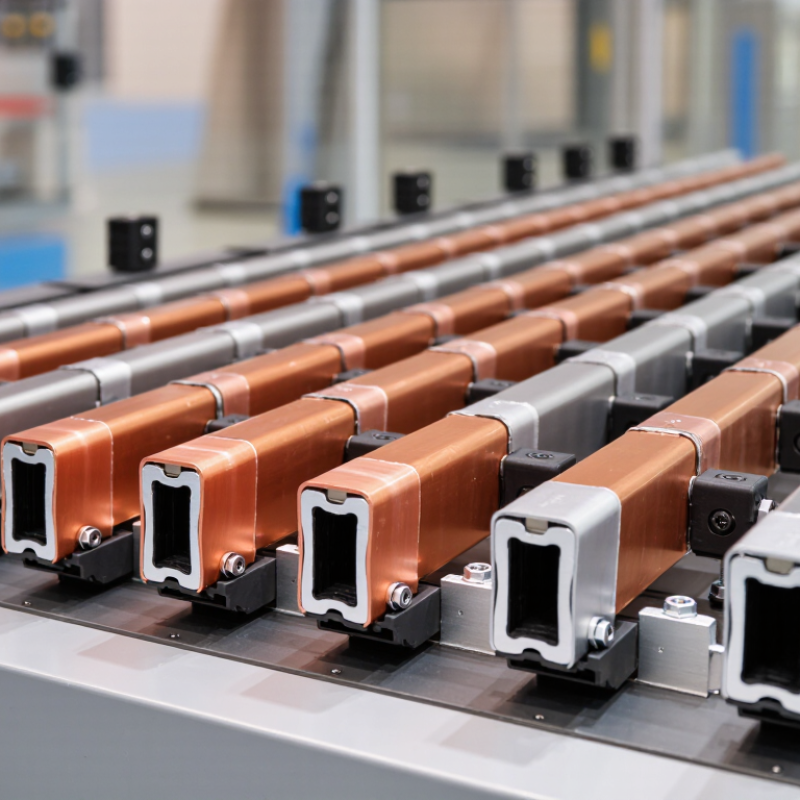
CCS usually means a cell contacting system: an assembly that links battery cells through conductive busbars and often includes sensing connections. Instead of routing many loose cables, it organizes electrical paths across a module. The busbars carry current between cells and toward the pack’s connection points. Small gaps matter.
A busbar’s material, thickness, and shape affect resistance and heat generation. During charging or high-load operation, even a compact connection can warm up. Engineers therefore check current demand, temperature rise, insulation spacing, and how the assembly is secured. A CCS may also position voltage-sensing leads, helping the battery management system monitor individual cell groups. It is not just metal.
Mechanical details deserve equal attention. Vibration, cell swelling, and repeated temperature changes can stress joints or insulation. In practice, drawings can look cleaner than a real pack; tolerances and assembly access sometimes complicate the layout. A useful review checks weld consistency, clearances, and whether technicians can inspect the connection without disturbing nearby parts. These checks help make battery systems safer and more dependable, though the right design depends on pack geometry, current levels, and operating conditions.
7 Best CCS Busbar Suppliers for Global Buyers - What CCS Busbars Are and How They Support Battery Systems
CCS (Cell Contacting System) assemblies connect battery cells to monitoring electronics. They commonly combine conductive busbars with a flexible printed circuit or other sensing components to support cell-voltage and temperature monitoring. The profiles below describe supplier types to consider, not named or ranked companies; actual capabilities vary and should be verified directly.
| Supplier profile | Typical CCS-related offering | Potential advantage | Best suited to | What buyers should verify |
|---|---|---|---|---|
| Integrated battery interconnect manufacturer | Custom cell interconnect assemblies combining busbars, sensing circuits, insulation, and mechanical supports. | Can coordinate several CCS components under one design and manufacturing process. | Pack developers seeking a consolidated supply route. | Design ownership, validation scope, traceability, production capacity, and change-control process. |
| Flexible-circuit specialist | Flexible printed circuits for cell-voltage sensing and, where designed, temperature-sensor connections. | Expertise in circuit layout, flexible substrates, connectors, and electrical testing. | Projects where sensing-circuit routing and packaging are key design constraints. | Circuit test coverage, insulation design, connector compatibility, and environmental qualification. |
| Busbar manufacturer | Conductive busbars made to specified geometry, material, finish, and joining requirements. | Focused capability in metal forming, cutting, finishing, and electrical interconnection. | Buyers that already have a separate sensing-circuit or CCS integration partner. | Material certificates, dimensional controls, resistance requirements, joining method, and corrosion protection. |
| Automotive supply-chain manufacturer | Battery interconnect products developed for vehicle programs and associated quality processes. | May offer established program management, supplier controls, and production-quality systems. | Automotive programs with formal validation and documentation requirements. | Relevant certifications, audit results, product-specific test reports, and ability to support the required production schedule. |
| Battery-pack integrator | Pack-level design and assembly that may include CCS integration with cells, enclosure, and battery-management electronics. | Can assess the interconnect in the context of the complete battery system. | Buyers sourcing a larger battery subsystem rather than a standalone component. | Scope of supply, interface responsibility, repair strategy, test evidence, and ownership of design changes. |
| Engineering and prototyping supplier | Early-stage CCS design support, samples, and low-volume builds for evaluation or pilot programs. | Can support design iteration before requirements and production processes are finalized. | New battery designs, feasibility studies, and pre-production testing. | Prototype-to-production transition plan, repeatability, sample documentation, and tooling ownership. |
| High-volume electronics manufacturer | Scaled assembly of sensing circuits and related components, subject to the facility’s process capabilities. | May provide repeatable assembly processes and capacity for established designs. | Mature programs with stable specifications and forecasted demand. | CCS-specific experience, process controls, yield reporting, component sourcing, and capacity commitments. |
Selection note: Compare suppliers using the same drawings, electrical and mechanical requirements, operating environment, validation plan, and forecast. Request evidence for applicable quality certifications and product-level testing rather than assuming a capability from a supplier’s profile alone.