What Is the Best Type of Bath Waste Push Button in 2026?
Choosing the best Bath Waste Push Button in 2026 is less about appearance alone and more about fit, reliability, and everyday use. A smooth button can make draining a bath feel simple. A poorly matched mechanism may stick, leak, or prove difficult to service.
Most options use a push-to-open and push-to-close mechanism, but their materials, seals, and installation requirements vary. Brass components can offer reassuring durability, while quality plastic parts may suit tighter budgets. Neither material guarantees a trouble-free product. Details matter. Check the bath’s waste-hole size, overflow arrangement, and available access before comparing finishes or prices. A button designed for one waste assembly may not fit another, even when both look similar.
This guide examines how common push-button bath wastes differ in operation, maintenance, and value. It also considers practical details, such as whether the plug can be removed for cleaning and whether replacement seals are available. Manufacturer specifications and installation instructions are more dependable than appearance or vague product claims. If the existing waste is awkward to reach, a simpler, compatible design may be the wiser choice. Not always. Some installations require specialist advice, so confirm compatibility with a qualified installer when measurements or plumbing connections are uncertain. The best choice is the one that suits the bath, works consistently, and remains maintainable after installation. One detail is easy to overlook: ease of cleaning matters months later, not just on fitting day.
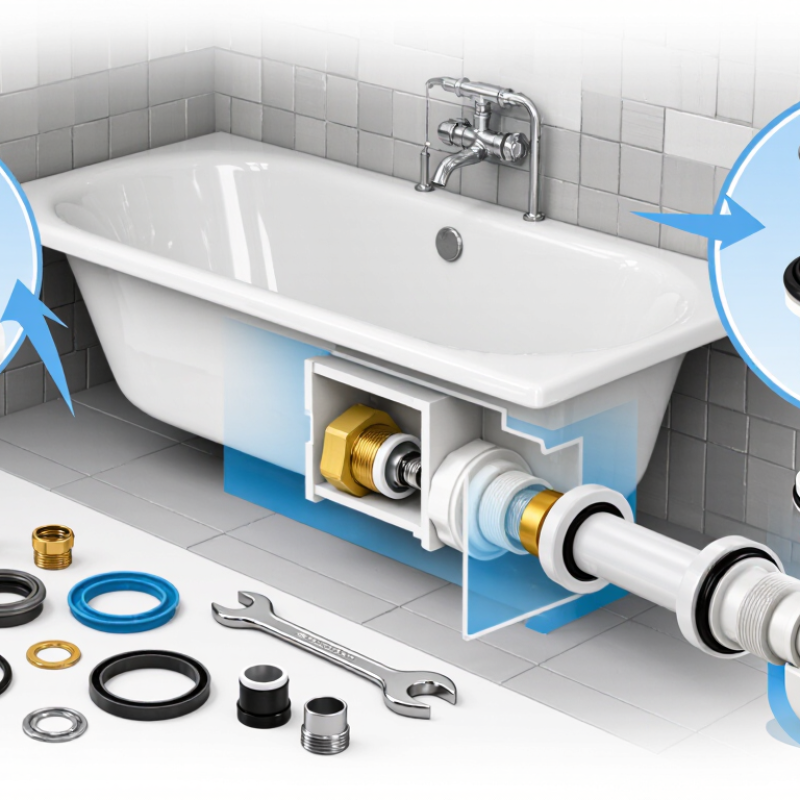
Bath-Waste Push Buttons: Function and DN 40 (1½-Inch) Connections
A bath-waste push button lets you open or close the drain from the bath’s overflow area, without reaching into the water. Pressing the button moves a cable or linkage connected to the waste valve. One press seals the outlet; another releases it. The mechanism should move smoothly, with no grinding or excessive force. Small details matter. A stiff button can indicate poor adjustment, debris, or a worn component, not necessarily a faulty waste.
DN 40, often described as 1½-inch, refers to a common nominal connection size for bath waste plumbing. It does not guarantee that every fitting will connect directly. Actual outlet dimensions, thread type, trap design, and available installation space can differ. Check the product’s connection details against the existing waste and trap before buying. A dry fit can reveal alignment problems before sealant or water enters the picture.
For many standard baths, a push-button waste with a compatible DN 40 outlet offers convenient operation and familiar plumbing connections. Still, the best choice depends on the bath’s overflow layout and how easily the mechanism can be reached for adjustment. Keep the cable free of sharp bends, and check that seals sit flat. I would not assume a neat-looking button means an easy installation. That is often where expectations go wrong.
Click-Clack, Pop-Up, and Cable-Operated Waste Mechanisms Compared
Click-clack wastes open and close with a press on the plug. Their simple mechanism is easy to understand, and the visible top is quick to wipe clean. But hair and soap can collect around the plug, so regular removal matters.
A pop-up waste uses a stopper lifted by a lever, often near the tap. It keeps fingers out of standing water, though its linkage may need adjustment when the stopper sits crooked.
Cable-operated wastes connect the control to the plug with a flexible cable. This can make installation easier where access behind the bath is tight, but a stiff or poorly aligned cable may frustrate operation.
There is no reliable public head-to-head dataset proving one mechanism lasts longest; fit, water hardness, cleaning, and installation all matter. For broader water-use context, the U.S. EPA WaterSense bathroom-faucet specification sets a 1.5-gallon-per-minute maximum, compared with the 2.2-gallon-per-minute federal baseline for standard bathroom faucets. That figure concerns faucets, not bath wastes, so it should not be used to rank drain mechanisms. For a frequently used family bath, choose a mechanism with an accessible, removable plug and parts that can be serviced. For a tight installation, a cable system may be practical. Still, it adds moving parts. A click-clack is neat, but not maintenance-free.
How EN 274 Tests Bath-Waste Flow, Sealing, and Durability
Choosing a bath-waste push button is not just a matter of finish or feel. The complete waste fitting must drain effectively, retain bathwater, and withstand repeated use. EN 274 sets requirements and test methods for sanitary appliance waste fittings, including flow, tightness, and mechanical endurance. Check that the documentation covers the fitting configuration you plan to install; a polished button alone tells you little.
Flow tests assess how water passes through the waste under defined conditions. A restricted outlet may leave water standing around the plug. Real bathrooms add hair and soap residue, though, so test results cannot predict every drainage problem. Keep the waste accessible for cleaning. Small detail, big difference.
Tightness testing checks whether the fitting holds water without leaks at relevant connections or when closed. Endurance testing examines moving parts through repeated operation, which matters for a push button and its linkage. Ask whether the stated test applies to the complete assembly, not only one component. Installation alignment, seal condition, and cleaning habits still affect service life. Standards help compare products, but they do not replace careful fitting or routine inspection.
Check 40 mm Pipework, Overflow Fit, and Trap Compatibility
The best bath-waste push button is the one that matches the pipe, overflow, and trap—not simply the one with the neatest finish. A 40 mm connection is common in UK and European bath installations, but nominal size does not guarantee a direct fit. Measure the waste outlet and the pipe’s outside diameter; adapters can change the connection. A shiny button is no help if the cable cannot reach the waste.
Check how the overflow operates. Cable-operated buttons suit baths where the control sits at the overflow, while click-clack wastes open by pressing the plug itself. Some baths have limited space behind the overflow, so measure before ordering. It is easy to miss.
The 2024 International Plumbing Code sets a general trap-seal depth of 51–102 mm; confirm local requirements and the trap’s outlet size before choosing. EN 274-1:2002 also sets requirements for sanitary-appliance waste fittings, but it does not make every fitting interchangeable.
A dry-fit check can reveal a mismatch early: align the waste, overflow, and trap, then check that the plug opens freely and the joints sit square. One detail can still be overlooked: the bath’s overflow opening may need a specific waste flange.
Choose by Material, Maintenance Needs, and Bath-Use Frequency
What Is the Best Type of Bath Waste Push Button in 2026?
Choose by Material, Maintenance Needs, and Bath-Use Frequency
For a bath used every day, choose a push button with a sturdy metal cap and a mechanism that feels firm, not gritty. Brass and stainless steel generally tolerate repeated handling better than plated plastic, though finish quality and water chemistry matter. A shiny surface can show fingerprints and mineral spots. A brushed finish is often more forgiving.
Maintenance matters as much as appearance. Look for a button that can be lifted or unscrewed for cleaning, and check that the seal and linkage are replaceable. Rinse away soap residue; avoid abrasive pads and harsh cleaners that may dull the finish. The U.S. EPA WaterSense program reports that labeled bathroom sink faucets use at least 20% less water than standard models. That figure concerns faucets, not bath wastes, so it should not be treated as a durability rating.
For an occasional guest bath, a well-made plastic button may be a reasonable lower-cost choice. Heavy daily use calls for a corrosion-resistant cap and a serviceable mechanism. Check how the button operates with wet fingers, and test that it returns smoothly after pressing. Small detail. I would not choose by metal name alone: a poorly finished metal part can disappoint sooner than a simpler, replaceable design.