7 Tips for Buying a Single Pole Transformer
Buying a Single Pole Transformer is not simply a matter of choosing the lowest listed price. The right unit must match your voltage, kVA load, installation environment, and future operating needs. A small error in these details can cause overheating, voltage problems, or expensive replacement work. This guide presents seven practical tips for evaluating transformer options with greater confidence.
Begin with the equipment nameplate and your actual electrical demand. Confirm the primary and secondary voltages, phase arrangement, frequency, impedance, and required capacity. Do not rely only on a seller’s short product description. Review the manufacturer’s datasheet, technical drawings, efficiency information, and applicable certification details. A qualified electrician or power engineer should verify the selection before purchase.
Look closely at construction quality, enclosure protection, cooling, mounting hardware, and connection points. Outdoor installations may face rain, dust, sunlight, and temperature changes. Indoor units still need adequate ventilation and safe clearance. Consider warranty coverage, replacement parts, delivery reliability, and technical support—not just the purchase price. The cheapest option may become costly after installation delays or poor service.
Some assumptions deserve reconsideration. A transformer with extra capacity is not automatically the best choice, because oversizing can affect cost and efficiency. Likewise, a familiar brand is not proof of suitability. Compare verified specifications from reputable suppliers, and keep written records of every requirement. These seven tips will help you ask sharper questions, identify hidden risks, and choose a Single Pole Transformer that supports dependable, safe, and practical operation.
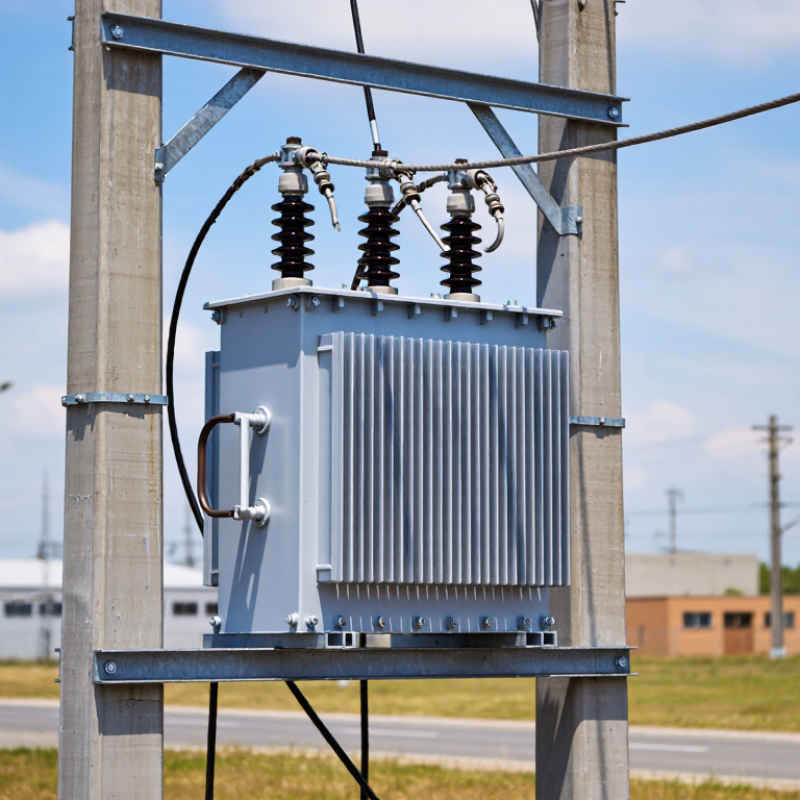
Define Load Demand: Select kVA, Voltage, Frequency, and Phase Ratings
7 Tips for Buying a Single Pole Transformer
Define Load Demand: Select kVA, Voltage, Frequency, and Phase Ratings
Begin with measured demand, not guesswork. List lighting, motors, heating equipment, and electronic loads separately. For single-phase service, calculate kVA as volts multiplied by amps, divided by 1,000. Motor starting current can briefly exceed running current by several times. That surge may cause voltage dips if the transformer is sized only for steady demand. Add a realistic growth allowance, but avoid excessive oversizing. Lightly loaded transformers can operate inefficiently.
Voltage must match both the primary supply and secondary equipment. Confirm the available line voltage, tap range, grounding arrangement, and required output voltage. A small error can damage equipment or create unstable operation. Check frequency carefully. A 50 Hz transformer is not automatically suitable for 60 Hz service, especially when magnetic flux and heating limits differ. Confirm the phase rating too. A single-phase load needs a compatible single-phase transformer; a three-phase installation requires different calculations and connections.
For three-phase systems, use kVA = 1.732 × volts × amps ÷ 1,000.
Review unbalanced loads and harmonics from drives, computers, or LED systems. The U.S. Department of Energy’s distribution-transformer analysis estimates these units consume about 2.5% of national electricity use, showing why efficiency deserves attention. The International Energy Agency reported global electricity demand grew 2.2% in 2023 and expects stronger growth through 2026. Demand forecasts matter. Still, a neat spreadsheet can be wrong. Verify readings onsite, then have a qualified engineer check insulation, temperature rise, protection, and fault-duty requirements before purchase.
Match Utility Standards: Check IEEE C57.12.20, ANSI, and Local Codes
7 Tips for Buying a Single Pole Transformer
A single-pole transformer must match the utility’s construction rules, not only its voltage and capacity. Tip: Request the utility’s current specification before choosing a design. IEEE C57.12.20 addresses overhead-type distribution transformers, including ratings, construction, and testing expectations. Tip: Confirm the transformer’s kVA, primary voltage, secondary voltage, frequency, and insulation class against that standard. A small mismatch can delay approval.
Tip: Check ANSI C84.1 for acceptable voltage ranges and system compatibility. Tip: Review local electrical codes, grounding requirements, clearances, wildlife protection rules, and installation limits. These details vary between service territories. Tip: Ask whether the utility requires specific bushings, tank fittings, nameplate data, or test certificates. Field experience shows that documentation gaps often cause more delays than manufacturing defects.
The U.S. Department of Energy’s 2024 transformer supply-chain assessment reported distribution-transformer lead times reaching roughly 12 to 30 months in some cases. Tip: Confirm lead time and reserve capacity early. Tip: Require routine test reports, including winding resistance, ratio verification, and dielectric testing. Tip: Have a qualified engineer compare the drawing with the site conditions. Standards are essential, but they do not replace judgment. I have seen approved designs need revision after a pole loading review. That part is easy to miss.
7 Tips for Buying a Single-Pole Transformer — Match Utility Standards
Use the chart as a quick reference when checking whether a proposed transformer falls within the scope of IEEE C57.12.20. Confirm the exact voltage, capacity, construction, grounding, and installation requirements with the serving utility and applicable local codes.
Buying checklist: Verify the primary voltage and frequency; select the required secondary voltage; confirm the kVA load calculation; check IEEE C57.12.20 and applicable ANSI requirements; review insulation and equipment ratings; confirm grounding, clearances, and installation rules; and obtain written approval from the local utility or authority having jurisdiction.
Reference values shown: IEEE C57.12.20 covers overhead-type distribution transformers rated 500 kVA and smaller, with high-voltage ratings up to 34.5 kV and low-voltage ratings up to 7,970/13,800Y volts. Always verify the current edition and local requirements.
Compare Efficiency: Review DOE 2016 Loss Limits and Transformer Performance
7 Tips for Buying a Single Pole Transformer
Compare Efficiency: Review DOE 2016 Loss Limits and Transformer Performance
A single pole transformer should be judged by losses, not efficiency alone. DOE 2016 standards set energy performance requirements for covered distribution transformers. However, coverage depends on construction, phase, insulation system, and rated capacity. Confirm the exact product category before comparing numbers.
Ask for the tested no-load and load losses. No-load loss continues while the transformer remains energized, even during quiet nighttime hours. Load loss rises as demand increases and often becomes noticeable near peak operation. Check the test voltage, frequency, temperature, and loading point. These details can change the result. A glossy efficiency figure may hide important assumptions.
Use the nameplate kVA and expected demand together. A transformer operating far below its rating may show modest load loss but still waste energy through its core. One running near capacity can produce heat, voltage drop, and higher copper loss. Field experience matters here. Real feeder loading is rarely constant. Review seasonal measurements when available, and request certified test data rather than a sales estimate.
Do not treat DOE compliance as proof of the best lifetime performance. It is a baseline. A slightly lower loss value may justify a higher purchase price in a heavily loaded installation. My own comparison mistake was focusing on peak efficiency and ignoring overnight energization. That overlooked continuous core losses. Also check sound levels, temperature rise, maintenance access, and installation conditions before making the final selection.
Plan Installation: Verify Grounding, Clearances, Safety, and Lifecycle Costs
Buying a single pole transformer requires more than matching voltage and capacity. Confirm the expected load, starting current, and future demand with a qualified electrical professional. A unit that seems adequate today may overheat when equipment expands. Check the site carefully. Measure pole strength, conductor routes, weather exposure, and access for lifting equipment. Measure twice.
Grounding deserves close attention. Verify the grounding electrode system, neutral bonding arrangement, and fault-current path against current electrical requirements. Do not assume an existing ground is suitable. Ask for test records when available. Clearances around energized parts must protect workers, vehicles, windows, roofs, and nearby trees. Leave practical working space, not only the minimum shown on a drawing.
Review enclosure ratings, surge protection, and environmental conditions before ordering. Coastal air, dust, ice, and flooding can shorten service life. Compare purchase price with installation labor, inspection costs, energy losses, maintenance, and eventual replacement. Request technical documents, warranty terms, and spare-part availability. A clear record supports reliable maintenance.
I once underestimated cable routing. The transformer fit, but the installation became expensive. That mistake changed how I review site plans. A second professional review may reveal overlooked risks. Use licensed personnel for installation, testing, and energization, and keep photographs of grounding connections and final clearances. Safety labels should remain visible after commissioning. tempfile?